Thinking Small: How Tiny One-Barrel Breweries Are Quietly Changing American Beer Culture
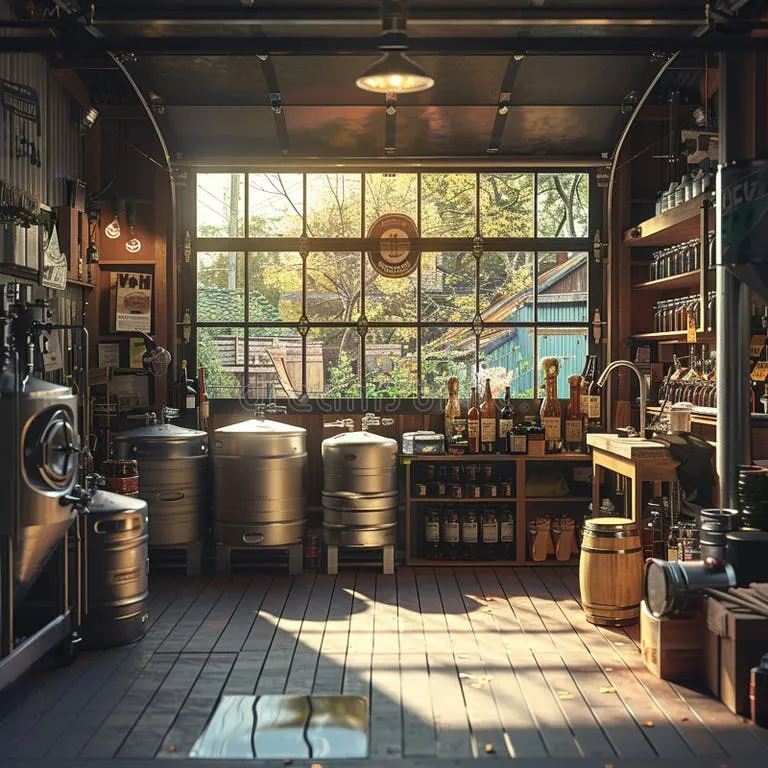
Photo: small garage brewery one barrel homebrew setup rustic, via thumbs.dreamstime.com
There's a barn in rural Vermont where, every other Saturday, a retired high school science teacher named Dale brews exactly 31 gallons of a wild-fermented farmhouse ale using honey from his neighbor's hives and foraged juniper berries he picks himself. He sells it in unlabeled growlers out of a converted mudroom. His waiting list is six months long.
Dale isn't an anomaly. He's part of a quietly surging movement that's threading itself through small towns, suburban garages, and forgotten industrial corners all across the United States. Welcome to the age of the nano-brewery — and if you haven't heard of it yet, that's kind of the whole point.
What Exactly Is a Nano-Brewery?
The craft beer world loves its labels. You've got your microbreweries, your brewpubs, your regional heavyweights. But nano-breweries occupy their own distinct category — typically defined as operations producing fewer than 2,000 barrels per year, with many running on single-barrel (31-gallon) or two-barrel systems. Some brew even less than that.
These aren't hobbyists who stumbled into a licensing office. Many nano-brewery founders are deeply serious brewers who made a deliberate choice to stay small — not because they couldn't scale up, but because they didn't want to. The economics are leaner, the creative control is absolute, and the connection to the local community is something you simply can't manufacture at industrial scale.
According to the Brewers Association, the number of operating craft breweries in the US has more than doubled over the past decade, and a significant chunk of that growth is happening at the nano level. These aren't the breweries making headlines at national competitions or landing shelf space at Total Wine. They're the ones your friend's cousin mentioned at a cookout, the ones you find by following a hand-painted sign off a county road.
Hyper-Local Ingredients, Hyper-Original Beers
One of the most exciting things happening inside these small operations is an almost obsessive commitment to local ingredients. When you're only brewing 30 gallons at a time, you can afford to be experimental in ways that a 50-barrel production brewery simply cannot.
Take Marcus and Leila, who run a two-barrel operation out of a converted carriage house in Western North Carolina. Their flagship brew changes with the growing season — last fall it was a dark amber ale brewed with locally malted barley and sourwood honey; this spring they're working on a saison featuring spent grain from a neighboring coffee roaster and dried pawpaw fruit from a community orchard down the road.
"We're basically brewing with whatever's interesting within about 20 miles of us," Marcus says. "It keeps things weird. It keeps things honest."
That philosophy — brewing with whatever's interesting and nearby — is showing up in nano-breweries from Appalachia to the Pacific Northwest. In Oregon, a former botanist brews with foraged Douglas fir tips. In rural Texas, a rancher-turned-brewer sources mesquite for a smoked porter that tastes unmistakably like the Hill Country air. These aren't gimmicks. They're expressions of place in a way that mass-produced craft beer, for all its variety, struggles to replicate.
Building Community Without a Distributor
Here's the part that really flips the traditional brewery business model on its head: most nano-breweries don't distribute at all. They don't need to.
Instead of fighting for tap handles at bars or negotiating with regional distributors, nano-brewers are building direct, personal relationships with their customers. Think brewery pickup days that feel more like neighborhood block parties. Think text-message alerts to a tight list of regulars when a new batch is ready. Think community-supported brewery (CSB) models — yes, like a CSA for vegetables — where members pay upfront for a season's worth of beer.
This approach creates something rare in the modern consumer landscape: genuine loyalty rooted in genuine connection. When you know the person who brewed your beer, when you've watched them haul grain sacks and wrestle with fermentation temperatures, the beer means something different. It carries a story.
For the brewers themselves, staying small also means staying out of the brutal economics that have squeezed many mid-size craft breweries in recent years. Distribution costs money. Marketing costs money. Taproom staff, canning lines, refrigerated trucks — it all adds up fast. A nano-brewery can operate profitably at a fraction of the volume, especially when the brewer is doing most of the work themselves.
The Creative Freedom Factor
Ask any nano-brewer what they love most about their operation and you'll hear some version of the same answer: freedom.
There are no sales reps asking for more of the easy-drinking lager that moved well last quarter. There's no marketing team pushing back on an experimental sour aged in a bourbon barrel sourced from a distillery two towns over. When you're brewing 30 gallons at a time, every batch is a creative decision — and if it doesn't work, you've lost 30 gallons, not 300.
This willingness to take risks is producing some genuinely boundary-pushing beer. Styles that wouldn't survive a focus group are thriving in nano-brewery tasting rooms and pickup lines. Oyster stouts brewed with actual oysters from a local aquaculture farm. Kvass made from heritage rye bread baked by a nearby artisan bakery. Herbed gose beers that taste like someone distilled an afternoon in a summer garden into a glass.
Not all of it works. But that's kind of the point. The experimental nature of nano-brewing is generating a feedback loop of creativity that's feeding ideas upward into the broader craft beer conversation.
What This Means for the Rest of Us
You might never make it to Dale's mudroom in Vermont or Marcus and Leila's carriage house in North Carolina. That's okay. The nano-brewery movement isn't really asking you to travel — it's asking you to look closer to home.
Chances are, if you poke around your own county or the next one over, you'll find someone brewing something remarkable in a space that wasn't designed for it, with ingredients that weren't supposed to go in beer, for a community that didn't know it needed them until they showed up.
That's the thing about the off-the-beaten-path ethos that drives so much of what we love about craft beer. The best stuff isn't always in the spotlight. Sometimes it's at the end of a gravel driveway, behind a barn door, waiting for someone curious enough to knock.
So knock.