Last Call for Normal: American Craft Brewers Are Rebuilding Their Craft Around a Changing Climate
Every spring, hop farmers in the Yakima Valley of Washington State watch the sky. The valley produces about 75 percent of America's hops, and what happens there between April and September ripples through taprooms from Portland, Maine to Portland, Oregon. When the season goes sideways—too dry, too hot, too unpredictable—the effects don't stay in the Pacific Northwest. They show up in your pint glass, sometimes months later, in ways you might never connect to a weather event a thousand miles away.
That ripple effect is getting more pronounced. And craft brewers across the US are no longer treating climate variability as an occasional inconvenience. They're treating it as a permanent feature of the landscape they work in—and rebuilding their operations accordingly.
The Ingredients Are Moving
Hops are climate-sensitive in ways that make them particularly vulnerable to the kind of variability that's becoming the new normal in American agriculture. They thrive in a fairly narrow band of growing conditions, and the regions that have historically produced the best American hop varieties are seeing those conditions shift in ways that are measurable and accelerating.
Drought stress during the growing season affects resin development, which means the aromatic compounds that define a hop's character can come in weaker, different, or inconsistent from year to year. Brewers who've built recipes around specific hop varieties are finding that the same variety can perform very differently depending on the vintage—a reality that wine drinkers are familiar with but that beer culture has been slower to acknowledge.
Some craft brewers are responding by building relationships with multiple hop farms across different growing regions, essentially hedging their aromatic bets. Others are experimenting with varieties bred for resilience rather than peak aromatic expression—a tradeoff that's philosophically uncomfortable for brewers who've spent years optimizing for flavor, but increasingly necessary as a practical matter.
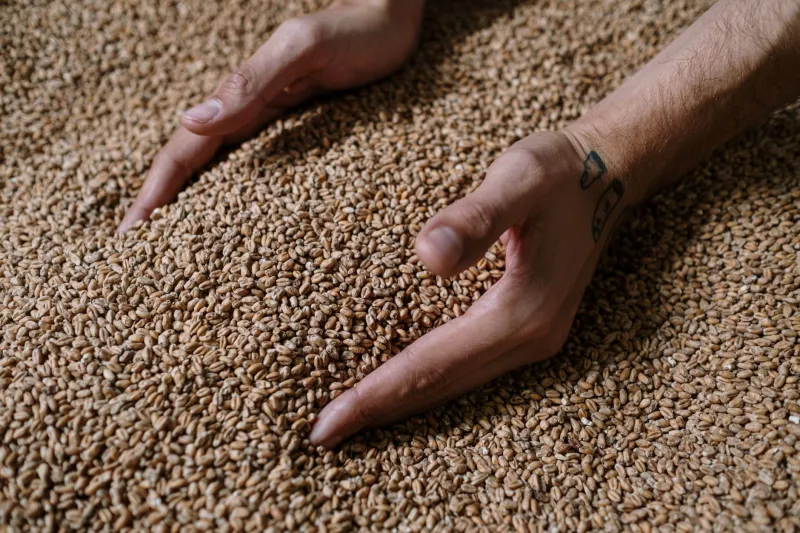
Barley is facing its own pressures. The grain belts that supply American maltsters are experiencing more frequent drought conditions, and the malting barley crop—already a relatively small slice of overall barley production—is competing for water resources against commodity crops with deeper economic backing. Several regional maltsters have begun working with plant breeders to identify or develop varieties that can handle drier, hotter growing seasons without sacrificing the qualities that matter for brewing.
Water: The Crisis Hiding in Plain Sight
If you had to pick the single climate-related challenge that keeps craft brewers up at night, water would win in a landslide. Beer is, at its most fundamental level, mostly water. The quantity and quality of water available to a brewery shapes everything from recipe development to production volume to long-term operational viability.
In the American West, where some of the country's most celebrated craft brewing scenes are concentrated, water scarcity is no longer a distant threat. It's a present operational reality. Breweries in Colorado, California, and the Southwest are dealing with municipal water restrictions, rising water costs, and in some cases, genuine uncertainty about whether their local supply will remain adequate as regional conditions worsen.
The responses are varied and, in some cases, genuinely inventive. Some breweries have invested in greywater recycling systems that dramatically reduce their net water consumption per barrel produced. Others are experimenting with dry-hopping and other techniques that allow them to achieve strong aromatic character with less water-intensive brewing processes. A handful of operations in particularly water-stressed regions are exploring rainwater collection and on-site storage as a supplemental supply—a strategy that requires significant infrastructure investment but that some operators see as a long-term necessity rather than an option.
What's striking is how much this water focus is changing the flavor conversation. When a brewery in an arid region starts treating water as a precious and variable resource rather than a commodity input, it changes how they think about every recipe. Water becomes something to be stewarded, not just used—and that shift in mindset tends to produce more thoughtful, more intentional brewing across the board.
Seasonal Brewing Gets a New Meaning
Craft brewing has always had a seasonal dimension. Oktoberfest lagers, winter warmers, spring saisons—the calendar has long shaped what ends up on tap. But climate change is adding a layer of genuine unpredictability to that seasonal rhythm that's forcing breweries to be more flexible and more responsive than their traditional release calendars allow.
Brewers in the Southeast are dealing with hurricane seasons that can disrupt ingredient deliveries at critical moments. Midwest breweries are navigating increasingly erratic spring weather that affects local grain harvests. Pacific Northwest operations are watching wildfire smoke affect not just air quality but the flavor of locally grown hops in ways that are difficult to predict or control.
Some breweries are responding by leaning harder into what's available and local, building recipes around whatever their regional agricultural partners are producing in a given season rather than planning around fixed ingredient lists. This approach requires a tolerance for variability that's culturally new for many craft brewing operations—and it's producing beers that are, in a very literal sense, documents of the specific conditions that created them.
Finding Opportunity in Disruption
For all the urgency of the challenge, there's a strain of genuine optimism running through the craft brewing community's response to climate change. The brewers who are adapting most successfully tend to be people who are energized by constraints rather than paralyzed by them—and the craft brewing world has always attracted that personality type.
The shift toward drought-resistant grains like sorghum, millet, and emmer wheat, driven partly by necessity, is opening up flavor territory that traditional barley-centric brewing never explored. Brewers who've been forced to experiment with alternative water sources are discovering that the mineral profiles of those sources create interesting and distinctive brewing water characteristics. The push toward radical local sourcing, accelerated by supply chain uncertainty, is producing beers with genuine regional identity that the industry has talked about achieving for years without quite getting there.
None of this makes the underlying challenge less serious. The disruptions are real, the costs are significant, and some breweries in particularly vulnerable regions may not survive the transition. But the craft brewing community's response to climate pressure is beginning to look less like an industry in retreat and more like one that's finding, off the beaten path as always, a different way forward.