Rocks, Minerals, and Malts: The Geologists Helping Craft Brewers Dig Into Flavor
Wine people have been talking about terroir for decades. The idea that soil, slope, and subterranean rock can show up in a glass of Burgundy is practically gospel at this point. Beer folks, though? We've been slower to the conversation. That's starting to change, and the people pushing it forward aren't always coming from the brewing side of the table.
Across the country, a growing number of small craft breweries are forming unlikely partnerships with geologists, hydrologists, and soil scientists to understand exactly what's underneath their operations — and more importantly, how it's shaping what ends up in the pint.
What the Ground Has to Say
Every brewer knows water matters. It's roughly 90 to 95 percent of what's in your beer, after all. But the conversation usually stops at pH levels and mineral adjustments — the kind of technical dialing-in that happens in a back room with test strips and spreadsheets. What's less discussed is the why behind the water chemistry in the first place.
The mineral profile of a brewery's water source is almost always a direct reflection of the geology it passes through. Water moving through limestone picks up calcium and bicarbonate. Granite-filtered water tends to be soft and low in dissolved solids. Iron-rich sandstone can leave its own quiet signature. These aren't abstract chemistry facts — they show up in your beer's mouthfeel, clarity, bitterness perception, and even how well certain yeast strains perform during fermentation.
Dr. Mara Elkins, a hydrogeologist based in Fayetteville, Arkansas, has spent the last three years consulting with breweries in the Ozark Plateau region. "Most brewers already have an intuition that their water is doing something interesting," she says. "What we're doing is giving them the vocabulary and the science to understand it — and then to lean into it intentionally."
The Ozarks: A Case Study in Limestone Brewing
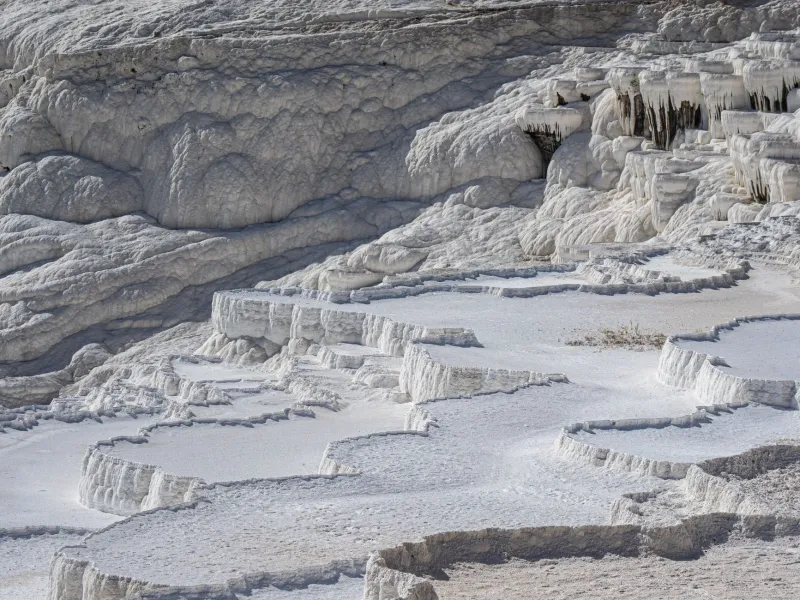
The Ozark Plateau sits atop one of the most significant karst formations in the United States — a landscape shaped by centuries of water dissolving and reshaping limestone bedrock. Springs in this region are legendary for their clarity and mineral consistency, and they've supported everything from whiskey distilleries to trout farms for generations.
For breweries like Lost Signal Brewing Co. in Springfield, Missouri, that geology is now front and center in the brand story. Head brewer Caleb Voss started working with a local geologist two years ago after noticing that his lagers had a distinctly rounded, almost creamy quality that he couldn't entirely explain through recipe adjustments alone.
"We mapped our water source back to a spring-fed aquifer about twelve miles out," Voss explains. "The calcium carbonate content is really high, which was pushing our mash pH in ways that were actually working in our favor for certain styles. Once we understood that, we stopped fighting it and started building recipes around it."
The result is a lineup that leans hard into the region's natural water profile — soft, approachable lagers and cream ales that taste, in Voss's words, "like they belong here."
Iron Country: Brewing in the Shadow of the Iron Range
Head north to Minnesota's Iron Range and the geology shifts dramatically. This is taconite country, where iron ore extraction has defined the economy for over a century. The water that filters through the region's ancient banded iron formations carries a very different mineral signature — one that local brewers are only beginning to fully explore.
Boulder Tap House in Ely, Minnesota started collaborating with a retired mining geologist named Frank Turchetti after he wandered in for a pint and started asking questions about their water source. What began as a bar conversation turned into a formal consulting arrangement.
"Frank basically told us we were sitting on top of some of the most geologically distinct water in the Midwest and not really using it to our advantage," says co-owner Dana Korhonen. "He helped us understand that the slightly elevated iron and manganese in our source water wasn't a problem to correct — it was a characteristic to work with."
The brewery now produces a Finnish-inspired farmhouse ale — a nod to the region's Scandinavian immigrant heritage — that uses minimally treated local well water. The result is a beer with a subtle earthiness and a dry, mineral-forward finish that you won't find replicated anywhere else.
The Pacific Northwest: Volcanic Complexity
Out west, the geological story gets more dramatic. The Cascade Range and its volcanic predecessors have left the Pacific Northwest with some of the most geologically varied terrain in North America. Breweries in central Oregon, for instance, draw from aquifers that filter through layers of volcanic basalt — a process that strips water of many dissolved minerals and produces some of the softest, most neutral brewing water in the country.
That softness is a big reason why the region has become synonymous with hazy, hop-forward IPAs. Low mineral content allows hop aromatics to express themselves without the interference of high sulfate or calcium levels that can sharpen bitterness and dry out the finish.
Bend-based Sunriver Brewing has worked with Oregon State University's College of Earth, Ocean, and Atmospheric Sciences to formally document the geological profile of their water source. "We wanted to be able to say, with real scientific backing, why our water behaves the way it does," says head brewer Garrett Wales. "It's not just marketing. It actually informs every recipe decision we make."
Why This Matters Beyond the Science
There's a philosophical dimension to all of this that goes beyond water chemistry charts and geological surveys. When a brewery commits to understanding and expressing its local geology, it's making a statement about place — about the idea that a beer should taste like somewhere, not just something.
In a market crowded with brands chasing the same hop trends and importing the same adjuncts from the same suppliers, that kind of rootedness is increasingly rare. And increasingly valuable.
It's also a way of building community around something genuinely local. When Lost Signal tells its customers that their cream ale is shaped by Ozark limestone, or when Boulder Tap House traces its farmhouse ale back to the Iron Range aquifer, they're inviting people into a story that belongs to that specific patch of American ground.
"Wine drinkers have always understood that the land is part of the product," says Dr. Elkins. "Beer drinkers are starting to get there. And honestly, the geology of this country is so diverse that the flavor possibilities are almost endless."
So next time someone hands you a pint from a small regional brewery you've never heard of, maybe ask a different question. Not just what's in it — but what's under it.