Beyond the Grain Bill: Why the Most Exciting Beers Right Now Aren't Really Made from Barley
Let's get one thing out of the way: this isn't a piece about weird beer for the sake of weird beer. The brewers doing the most interesting work with unconventional ingredients aren't chasing novelty. They're chasing flavor. And increasingly, they're finding that the ingredients nobody in the beer world has thought much about — ancient grains, foraged botanicals, spices borrowed from culinary traditions that have nothing to do with German brewing law — are producing some of the most genuinely exciting results in American craft beer right now.
The Reinheitsgebot, the Bavarian purity law that restricted beer to water, barley, hops, and yeast, has cast a long cultural shadow over Western brewing. Even brewers who've never heard of it operate within its implicit logic: beer is barley and hops. Everything else is a deviation. But that framing is increasingly hard to defend when you taste what's coming out of the breweries that have abandoned it entirely.
So let's talk about what's actually going on — and who's leading it.
The Adjunct Conversation Has Changed
For most of craft beer's history, "adjunct" was practically a slur. It was the word used to describe the corn and rice that big industrial brewers added to their recipes to cut costs and thin out flavor. Craft brewing defined itself, in large part, as a rejection of that approach: real ingredients, full malt character, no shortcuts.
That framing made sense as a market positioning strategy in the 1990s and early 2000s. But it also created a blind spot. Because adjuncts — ingredients added to the grain bill beyond malted barley — aren't inherently cheap or flavorless. They're just ingredients. And when you start approaching them with the same curiosity a chef brings to a pantry, the possibilities are genuinely vast.
The shift really started gaining momentum in the mid-2010s, when a combination of forces converged: the rise of gluten-free brewing opened the door to grains like sorghum and millet as primary fermentables; the farm-to-table ethos pushed brewers toward locally foraged and sourced botanicals; and a new generation of brewers with culinary training and multicultural backgrounds started asking why beer's ingredient palette was so narrow compared to, say, the world of fermented beverages broadly.
The results have been uneven — some experiments don't work, and the beer world has seen its share of gimmicky releases that mistake novelty for vision — but the best of this work is genuinely transformative.
Grains You Forgot Existed
Sorghum is probably the most commercially established of the alternative fermentables, largely because of its role in gluten-free brewing. But what's interesting is how brewers who aren't making gluten-free beer are starting to incorporate it for purely flavor-driven reasons. Sorghum brings a dry, slightly tart, almost wine-like quality to fermentation that barley simply can't replicate. In the right application — a saison, a farmhouse ale, a light summer beer — it adds a dimension that feels genuinely novel.
Millet is having a similar moment. It's been used as a primary fermentable in traditional African brewing for centuries, and a handful of American brewers — some drawing explicitly on that heritage, others approaching it from a purely culinary angle — are discovering that it produces clean, crisp, slightly earthy beers with a minerality that's hard to achieve any other way.
Oats and rye have been in the craft brewer's toolkit for a while, but quinoa is newer territory. It's expensive and a bit fussy to work with, but the brewers who've cracked it describe a silky, slightly nutty quality that transforms the mouthfeel of lighter beer styles in interesting ways.
Then there's spelt — an ancient wheat relative that's been showing up in farmhouse and saison-style beers with increasing frequency. It's not dramatically different from wheat, but it has a slightly more complex, nuttier character that gives beers a sense of depth that's hard to articulate but easy to taste.
Foraged and Borrowed: The Botanical Turn
If alternative grains represent one axis of this movement, the botanical turn represents another. Brewers across the country are incorporating foraged ingredients — sumac, spruce tips, yarrow, elderflower, wild mushrooms, pawpaw — with a seriousness and intentionality that goes well beyond novelty.
Sumac, in particular, has become something of a signature ingredient for a cluster of Mid-Atlantic and Northeastern breweries. It contributes a bright, lemony tartness that works beautifully in wheat beers and saisons, and it has the added virtue of being genuinely native to the American landscape — a hop analog that predates hops in American brewing by centuries.
Mushrooms are more polarizing but arguably more interesting. Breweries like Scratch Brewing Company in Olla, Illinois have been doing serious work with foraged fungi for years, producing beers that taste like walking through a forest in a way that's hard to explain and impossible to forget. The key, as with most of these ingredients, is restraint and integration — the goal isn't a beer that tastes like mushrooms, but a beer that has depth and earthiness that mushrooms help build.
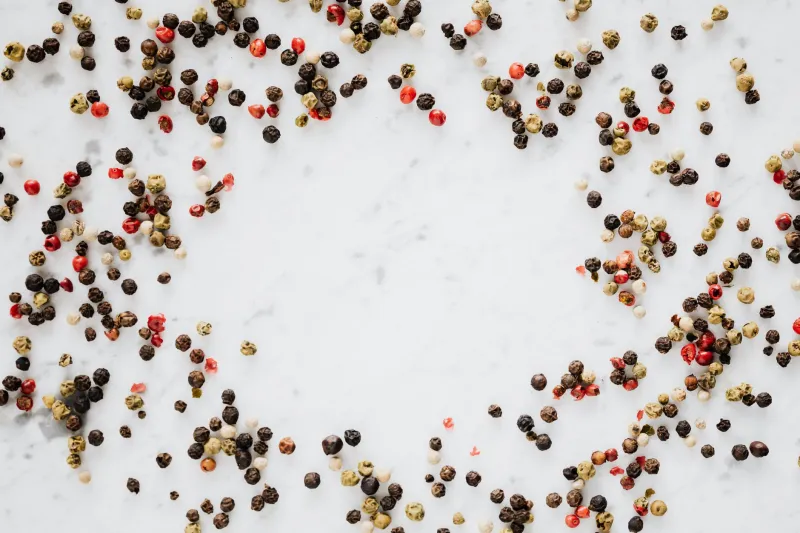
Spices borrowed from non-European culinary traditions are another frontier. Cardamom, sumac (again), berbere spice blends, Sichuan peppercorn — these are showing up in beers that feel less like European brewing experiments and more like genuine conversations between different food cultures. The best versions are subtle enough that you might not identify the specific ingredient, but you'd notice its absence immediately.
Who's Actually Doing This Well
A few names come up repeatedly in conversations about this space. Scratch Brewing, already mentioned, is probably the longest-running serious practitioner of foraged-ingredient brewing in the country. Their work is deeply place-specific — almost everything they use comes from within a few miles of the brewery — and the results taste like nowhere else on earth.
Bissel Brothers in Portland, Maine has been incorporating local and regional ingredients with a thoughtfulness that feels genuinely culinary. Dogfish Head in Delaware — which has been doing weird ingredient work since the late 1990s — deserves credit for proving that the market would support this kind of experimentation long before it was fashionable.
In the gluten-free and alternative-grain space, Ghostfish Brewing in Seattle has done more to demonstrate the culinary potential of millet and buckwheat than almost anyone. Their beers don't taste like compromises. They taste like choices.
The Bigger Argument
Here's the thing: the brewers doing this work aren't anti-tradition. Most of them have deep respect for the craft that came before them, and they know their way around a standard mash tun. What they're arguing — implicitly, through the beers they make — is that tradition is a starting point, not a ceiling.
Beer has always evolved in response to what was available, what was culturally relevant, and what people actually wanted to drink. The barley-and-hops paradigm isn't ancient wisdom handed down from on high. It's a historical artifact of particular agricultural and economic conditions in Northern Europe. American craft brewing, at its best, has always been willing to interrogate that inheritance.
The brewers pushing into sorghum and sumac and foraged mushrooms are just doing what American brewers have always done when they're at their most interesting: they're going off the beaten path and seeing what they find.
Spoiler: it's usually worth the detour.