Terroir in a Pint Glass: American Brewers Are Stealing the Wine World's Best Argument
Walk into a serious wine shop and ask about a bottle of Burgundy, and you'll get a lecture about the Côte de Nuits, the clay-limestone soils, the specific slope of a particular vineyard. The word terroir will surface within thirty seconds. It's the wine world's most powerful storytelling tool — this idea that place leaves a fingerprint on what's in the glass.
Now walk into a well-curated craft beer taproom and order something local. Increasingly, you're going to hear a version of the same conversation. The brewer will tell you about the water profile, the locally grown hops, the wild yeast captured from a nearby orchard. They might use the word terroir directly. They might not. But the argument is the same: where this was made matters.
That's a significant shift. And depending on who you ask, it's either the most exciting development in American craft beer or the most elaborate marketing exercise since someone decided to put a dragon on an IPA label.
Where the Idea Comes From
The terroir conversation in beer isn't entirely new. Lambic brewers in Belgium have been making place-based arguments about spontaneous fermentation for centuries. German brewing traditions are deeply regional by nature — the Reinheitsgebot itself was partly about geographic identity.
But in the American context, beer has historically been the opposite of regional. The big lager brands spent decades and billions of dollars making their products feel universal, placeless, available everywhere and tasting the same everywhere. Craft beer initially pushed back on that through flavor, not geography.
What's happening now is a second wave of differentiation. Flavor alone isn't enough anymore — there are thousands of craft breweries making excellent IPAs. The brewers who are gaining traction with the terroir argument are asking a different question: not just what does this taste like, but where does it come from?
The Ingredients Case
The most concrete version of the beer terroir argument runs through ingredients. Water chemistry has always shaped beer style — the famous hardness of Burton-on-Trent water made it ideal for pale ales, while the soft water of Plzeň gave us pilsner. American brewers are now revisiting that logic with a lot more intentionality.
Hops are the flashpoint. The Pacific Northwest has dominated American hop production for generations, but a new generation of small-scale hop farmers in places like New York's Hudson Valley, Michigan, and even parts of New England are growing varieties adapted to their specific climates. Brewers who source from these farms aren't just buying local for the marketing bump — they're working with ingredients that genuinely taste different from their Washington and Oregon counterparts.
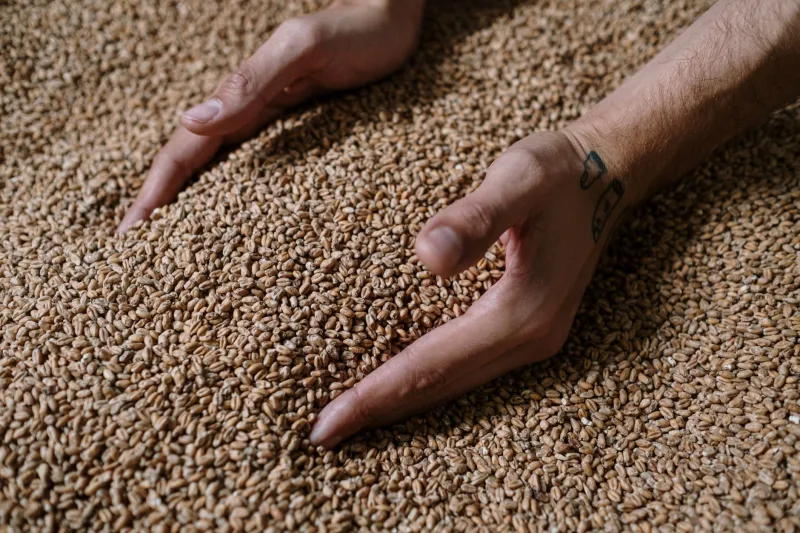
Grain tells a similar story. Heritage grain revivals, regional malting operations, and farm-direct relationships are giving brewers access to barley and wheat with distinct flavor profiles tied to specific soils and growing conditions. Maine Malt House, Admiral Maltings in California, and Riverbend Malt House in North Carolina are among the operations helping brewers make a credible geographic claim.
And then there's yeast — arguably the most terroir-adjacent ingredient of all. Wild fermentation projects, where brewers capture and cultivate native yeast strains from their local environments, are producing beers that genuinely couldn't be made anywhere else. Jester King in Texas and Allagash in Maine have both done serious work in this space, and the results are beers that taste unmistakably of their regions.
The Skeptic's Case
Not everyone is convinced, and it's worth taking the skepticism seriously.
The counterargument goes like this: wine terroir works because the grape is grown in the ground, in a specific place, under specific conditions, and you can't replicate that. Beer is manufactured. You can adjust your water chemistry to match any city in the world. You can source hops from anywhere. The geographic story is real in some cases, but it's also genuinely easy to fake — or at minimum, to overstate.
There's also the question of whether consumers can actually taste the difference. Blind tasting studies on beer regionality are rare compared to the mountain of wine research on the subject. The brewers making terroir arguments are often asking drinkers to take their word for it.
And the wine comparison cuts both ways. The wine world has spent decades dealing with terroir as marketing language that outpaces the actual science. Beer doesn't need to import that problem.
What the Brewers Actually Say
Talk to brewers who are serious about this stuff, and the honest ones are careful not to overclaim. They'll tell you that place matters in specific, demonstrable ways — and they'll point to those specifics rather than waving their hands at the concept of terroir.
What's interesting is how many of them are also explicitly competing with wine for a certain kind of drinker. The consumer who reaches for a natural wine because they care about provenance and craft is the same consumer who might reach for a farmhouse ale or a spontaneously fermented saison — if the story is told right.
Beer has a credibility problem with that audience that the terroir conversation is partly designed to solve. And whether you find that cynical or savvy probably depends on whether you think the story being told is true.
In the best cases, it is. There are American beers being made right now that taste like specific places, made with ingredients grown in specific soils, fermented with wild cultures native to specific regions. That's not marketing. That's craft.
The question is whether the rest of the industry can tell the difference — and whether drinkers will care enough to learn.