Into the Wild: Meet the Brewers Who Forage Their Own Ingredients From the American Backcountry
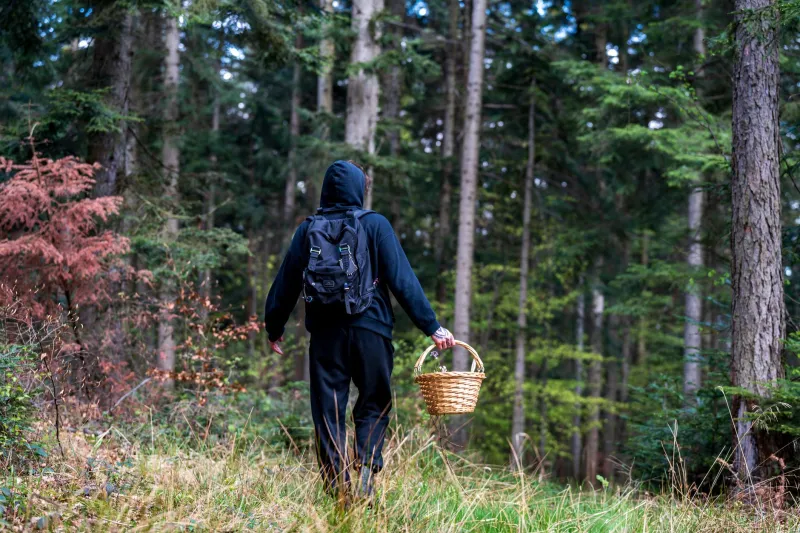
There's a particular kind of brewer who doesn't sleep well the night before a foraging trip. Not because they're anxious, but because they're excited — the way a kid gets excited on Christmas Eve, except instead of presents, they're anticipating muddy boots, scratched-up arms, and, if everything goes right, a canvas sack full of something no hop distributor on earth can sell them.
These are the hop hunters, the root diggers, the creek-walkers and ridge-climbers of the American craft brewing scene. They're a small but growing cohort of brewers who've decided that the path to a truly original beer runs straight through the wilderness, not through a supplier catalog.
Why Go Wild?
The short answer is flavor. The longer answer is a lot more interesting.
Commercially cultivated hops — your Cascades, your Centennials, your Citra — are bred and farmed for consistency. That's enormously useful if you're trying to hit the same flavor profile batch after batch. But consistency, by definition, means sameness. And for a certain type of brewer, sameness is the enemy.
Wild hops, by contrast, are chaos in cone form. They grow where they want, climb whatever they can grab onto, and develop flavor compounds shaped entirely by their immediate environment — the soil chemistry beneath them, the rainfall patterns around them, the specific microorganisms drifting through the air. Two wild hop plants growing twenty miles apart can taste startlingly different from each other. That's not a bug. For these brewers, that's the whole point.
"Every time I go out, I'm finding something I couldn't have predicted," says one brewer based in western North Carolina who spends several weeks each summer foraging along Appalachian ridgelines. "Sometimes it's floral. Sometimes it's almost piney, kind of resinous. Once I found a cluster that smelled like black pepper and fresh earth. You can't buy that. It doesn't exist in a warehouse anywhere."
Packing Light, Thinking Heavy
The logistics of backcountry ingredient foraging are more involved than you might expect. Brewers who do this regularly tend to develop almost ritualistic pre-trip routines — studying topographic maps for south-facing slopes where wild hops historically thrive, timing expeditions to hit peak ripeness in late summer, and building relationships with local ecologists, botanists, and Indigenous community members who hold generational knowledge about where particular plants grow and how to harvest them without damaging the stand.
Respect for the land is a recurring theme among brewers in this space. Most are careful to take only a fraction of what they find, leaving plenty behind for wildlife and for future harvests. Several have formalized this ethic into written foraging guidelines they share with their staff and their customers.
"We treat it like fishing with catch limits," explains a brewer from the Olympic Peninsula in Washington State who forages spruce tips, wild hops, and coastal botanicals for a rotating lineup of small-batch releases. "You take what you need. You leave the rest. You come back next year and the patch is still there."
Beyond hops, the ingredient lists these brewers are assembling in the field read like something between a field guide and a fever dream: yarrow, juniper berries, Douglas fir needles, stinging nettles, elderflowers, wild ginger, black walnuts, sumac, cattail pollen, and — in a handful of particularly adventurous cases — locally foraged mushrooms and tree bark. Each ingredient carries a flavor signature tied directly to where it grew, creating what the wine world calls terroir and what these brewers tend to describe in more straightforward terms: "It tastes like here."
The Beers That Come Out the Other Side
What happens in the brewhouse when you bring wild ingredients back from the field? Often, a lot of improvisation.
Wild hops typically have lower and less predictable alpha acid content than cultivated varieties, which means the bitterness calculations brewers usually rely on go straight out the window. Quantities, timing, and technique all have to flex around what the ingredient actually is rather than what a spec sheet says it should be. It's brewing by feel as much as by formula, and experienced wild-ingredient brewers tend to describe the process with a mix of humility and enthusiasm that's pretty infectious.
"You're not in control the way you normally are," says the North Carolina brewer. "And honestly, that's kind of the fun of it. You make your best guess, you adjust as you go, and sometimes you end up with something you never would have designed on purpose."
The resulting beers are, almost universally, small-batch and seasonal — available at the taproom for a few weeks, maybe a few months, and then gone. Some brewers bottle them in limited runs. Others keep them on draft only, which turns a visit to the taproom into a genuine discovery experience. You can't plan around these beers. You kind of have to just show up and see what's there.
A Deeper Relationship With Place
There's something philosophically interesting going on beneath the surface of all this foraging. Craft beer has always had a localism streak — the pride of place, the sense that a brewery belongs to its community and its geography. But wild foraging takes that idea further than almost anything else happening in the industry right now.
When a brewer hikes into the mountains behind their town and comes back with ingredients that exist only in that specific watershed, they're not just making a local beer in the marketing sense. They're making a beer that is ecologically tied to a place — one that carries, in a very literal way, the biology of the land around it. The yeast in the air, the minerals in the soil, the particular tangle of plants growing along that particular creek: all of it ends up in the glass.
For drinkers, that's a genuinely different kind of experience. It's not just "made in Vermont" or "brewed in Portland." It's made from this hillside, this forest, this stretch of coast. That level of specificity is rare in any food or drink category, and it's part of why these small-batch wild ales and foraged lagers have developed devoted followings that go well beyond the usual craft beer crowd.
Worth the Scramble
If you're the kind of beer drinker who gets excited about one-of-a-kind finds — the bottle you can't get anywhere else, the pint that makes you stop mid-sip and actually think — it's worth tracking down breweries doing serious wild-ingredient work. Look for taprooms in regions with accessible public land: the Pacific Northwest, the Appalachians, the Upper Midwest, the Colorado Rockies. Follow brewers on social media who post foraging trip photos alongside their beer shots. Ask the person behind the bar what's on tap that's truly seasonal, truly local, truly unrepeatable.
Because somewhere out there right now, a brewer is strapping on a daypack, pulling on a pair of gaiters, and heading up a trail with nothing but a field guide and a very good reason to see what's growing around the next bend. Whatever they bring back is going to end up in your glass — and it's going to taste like nowhere else on earth.