What's in Your Water? The Hidden Ingredient That's Been Shaping American Beer All Along

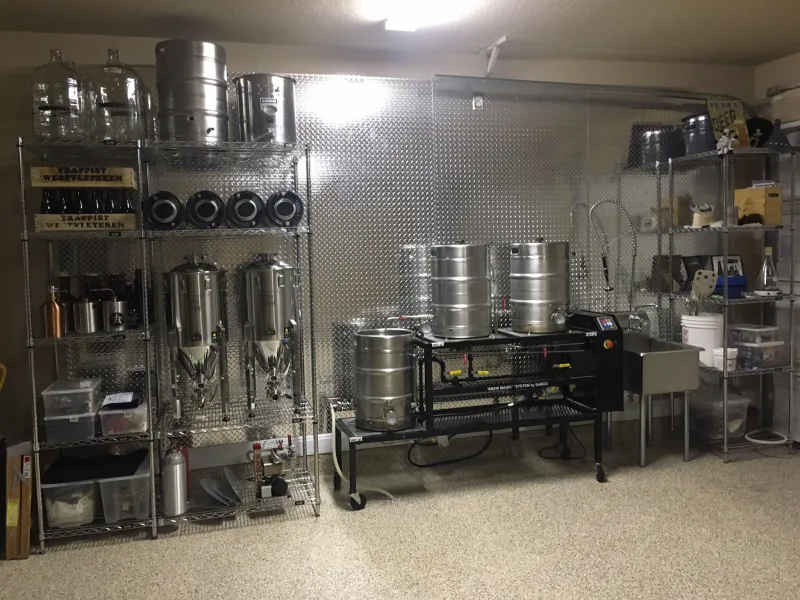
Photo: Xinxtang, CC BY-SA 4.0, via Wikimedia Commons
Picture two brewers. Same grain bill, same hop variety, same yeast strain, same fermentation temperature. They're separated by about 900 miles. One is in Burton-on-Trent, England. The other is in Portland, Oregon. They follow the same recipe to the letter.
They do not make the same beer.
The reason is water. Specifically, what's in the water — and the invisible mineral chemistry that turns a straightforward recipe into something that tastes like it belongs to a particular place and nowhere else.
This is liquid terroir, and while the wine world has been talking about terroir for decades, craft brewers are only now starting to get the credit they deserve for understanding it in their own medium.
Why Water Isn't Just Water
Turn on your tap and what you get depends almost entirely on where you live. Water picks up minerals as it moves through rock, soil, and municipal treatment systems, and those minerals — calcium, magnesium, sulfate, chloride, bicarbonate, sodium — don't just sit there passively. They actively participate in the brewing process.
Calcium, for instance, helps clarify beer and promotes healthy yeast activity. Sulfate accentuates hop bitterness, giving it that dry, crisp snap. Chloride rounds out malt character and makes a beer feel fuller in the mouth. Bicarbonate acts as a buffer, affecting the pH of your mash and ultimately shaping how enzymes convert starches to fermentable sugars. Too much of it and your dark malts can taste harsh and astringent rather than smooth and roasty.
None of this is random. The regional beer styles that became famous — English pale ales, Czech Pilsners, Irish stouts — weren't invented in a vacuum. They were shaped, over generations, by the specific water available to the brewers who made them.
The American Water Map
The United States is a genuinely fascinating case study in brewing water diversity, because the country's geology is so wildly varied.
The Great Lakes region — think Milwaukee, Chicago, Detroit — sits on a limestone-rich substrate that produces moderately hard water with significant bicarbonate content. This is part of why the lager tradition took root so firmly in that part of the country when German immigrants arrived in the mid-1800s. The water was reasonably well-suited to the style, and local brewers adapted their processes accordingly. Those big American lager brands you know? Their water chemistry is baked into their identity in ways most drinkers never think about.
The Pacific Northwest tells a completely different story. The Cascade Mountains filter snowmelt into some of the softest water in the country — low in minerals, low in hardness, nearly neutral in character. Soft water is notoriously tricky for brewing because it doesn't buffer well, but it also means brewers start with a blank slate. They can add precisely what they need. It's no coincidence that the Pacific Northwest became ground zero for the American IPA revolution — soft water, combined with locally grown Cascade and Centennial hops, created conditions where hop aroma and flavor could dominate without the mineral interference that might muddy the picture.
Then there's Colorado. The Front Range sits at elevation with access to both Rocky Mountain snowmelt and, in some areas, harder water from mineral-rich aquifers. Denver's water profile has historically been soft to moderately soft, which has influenced the clean, approachable character that many Colorado craft breweries have become known for.
And in the South and parts of Appalachia, limestone geology dominates again — high bicarbonate, high hardness — which creates natural affinities for darker, more robust styles. It's not a coincidence that some of the most interesting American stout and porter producers have popped up in places like Kentucky and Tennessee, where the water chemistry echoes what made Irish and English dark ales great.
Brewers Are Moving for Water
Here's where things get genuinely interesting: some craft brewers aren't just working with the water they have. They're moving to be near the water they want.
This sounds extreme until you talk to someone who's actually done it. The economics of water treatment — buying minerals in bulk, running reverse osmosis systems, constantly testing and adjusting — add up fast, especially for small operations. If you're trying to produce a specific style authentically, sometimes the most efficient path is to set up shop where the water already does what you need it to do.
Several brewery founders in the past decade have cited water access as a meaningful factor in their location decisions, right alongside real estate costs, local market size, and distribution logistics. The breweries don't always advertise this — it's not exactly a sexy marketing angle — but it's a real consideration.
It's also driving a kind of geographic beer identity that feels genuinely earned. When a small Kentucky brewery talks about their local water giving their brown ale a particular character, that's not just marketing copy. The limestone geology of the region is doing something measurable and real.
The Craft Brewer's Chemistry Lab
For brewers who can't or won't relocate, water chemistry has become one of the most technically sophisticated aspects of modern craft brewing. The best small-batch brewers in the country are testing their source water regularly, building mineral profiles for different styles, and adjusting with surgical precision.
A brewer making a soft, delicate Czech-style Pilsner needs water that's almost mineral-free — close to what flows naturally out of the sandstone geology around Plzeň. A brewer making a West Coast IPA wants elevated sulfate to sharpen that bitter finish. A brewer making a New England IPA wants the opposite — high chloride, low sulfate, to push the soft, hazy, juicy character that defines the style.
These aren't guesses. They're calculated adjustments, made possible by inexpensive water testing kits and a growing body of open-source brewing chemistry knowledge that simply didn't exist twenty years ago.
The Ingredient You Never See on the Label
Next time you crack open a local craft beer, consider what you're actually drinking. The water in that can or bottle didn't just carry the other ingredients — it shaped them. It influenced how the malt converted, how the hops expressed themselves, how the yeast behaved, and ultimately, how the whole thing tastes on your tongue.
That's terroir. Not as a concept borrowed from wine, but as a real, measurable, scientifically documented phenomenon that's been happening in American beer for as long as there's been American beer.
The craft brewing revolution gets credit for a lot of things — reviving hop culture, making barrel-aging mainstream, putting small towns on the map. But one of its quieter contributions is that it's made brewers — and drinkers — start paying attention to what was always the most important ingredient in the glass.