Garage Alchemists: The Homebrew Underground That's Been Quietly Running the Show
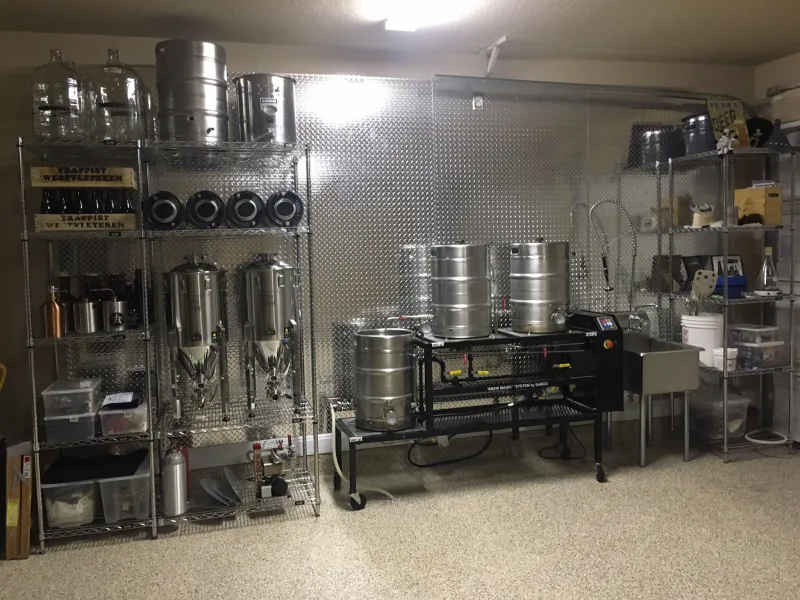
Photo: homebrewer garage basement craft beer homebrew setup fermentation buckets, via i.pinimg.com
Let's start with a confession that most people in the craft beer industry will make if you catch them in the right mood: a lot of the wildest, most interesting beer ideas didn't originate in a professional brewery. They came from a retired teacher in Ohio who was bored one winter. A software engineer in Austin who started homebrewing during a pandemic and never really stopped. A group of friends in Minneapolis who meet every third Saturday to swap bottles and argue about water chemistry.
The homebrew community has always been the beating, weird, experimental heart of American craft beer. And right now, it might be more influential than it's ever been.
The Garage as R&D Lab
There's something that happens when you remove the financial pressure from brewing. When you're not worried about whether a recipe will sell, or whether it fits your brand identity, or whether your distributor will know what to do with it — you're free to just try stuff. Really strange stuff. Stuff that has no business working.
And sometimes it works spectacularly.
Homebrewers have been ahead of the curve on sour beers, hazy IPAs, pastry stouts, and a dozen other styles that eventually became commercial hits. They were fermenting with wild yeast and adding fruit and experimenting with adjuncts that would have gotten a professional brewer laughed out of the room — years before any of that became mainstream.
"Homebrewers don't have to answer to anyone," says a long-time member of a homebrew club in the Denver metro area. "We can make a beer that's completely unhinged and if it's terrible, we just don't make it again. That freedom is actually really powerful."
The Online Ecosystem That Changed Everything
For most of homebrewing's history, knowledge traveled slowly. You learned from whoever happened to be in your local club, from books that were sometimes years out of date, and from trial and error that could take months to yield results.
The internet changed all of that, and the homebrew forums, subreddits, Discord servers, and YouTube channels that have grown up around this hobby are genuinely remarkable resources. Techniques that used to take years to master are now accessible to someone on their first or second batch. Obscure ingredient combinations get crowd-sourced feedback from hundreds of experienced brewers within hours.
Platforms like Reddit's r/homebrewing and dedicated sites like Homebrew Talk have become living archives of collective brewing knowledge — and more importantly, living laboratories where ideas get tested, refined, and sometimes go viral within the community before any commercial brewery touches them.
A recipe that gets passed around these spaces enough times, refined by dozens of different brewers across different setups and water profiles, often ends up being pretty bulletproof by the time it reaches a professional context.
When the Amateurs Influence the Pros
The line between homebrewer and professional brewer has always been blurry — a huge percentage of people working in craft breweries today started in their garages or kitchens. But the influence now flows in both directions in ways that are more visible than ever.
Some commercial breweries have formalized the connection. Homebrew competitions that feed directly into limited-release programs have become a real thing. A few notable breweries around the country have run "collab" programs where winning homebrewers scale up their recipe with the brewery's equipment and team. The winning brewer gets to see their vision realized at a level they couldn't achieve at home. The brewery gets a genuinely fresh idea that came from outside their usual creative process.
Other times the influence is less official. A style or technique that gains traction in homebrew communities shows up in commercial taprooms six to eighteen months later. Whether that's coincidence, parallel evolution, or direct inspiration is often hard to prove — but people who pay attention to both worlds notice the patterns.
"I've had commercial brewers reach out to me directly after seeing a recipe I posted online," says a homebrewer in Portland, Oregon who's developed something of a following for her mixed-fermentation experiments. "They're not copying it outright, but they're asking questions. They want to understand the thinking behind it."
The Club Scene Is Still Alive
For all the online activity, the in-person homebrew club hasn't gone anywhere. Across the US, these groups meet in church basements, back patios, brewery taprooms that donate the space, and yes, actual garages. They do blind tastings, style challenges, and group grain orders. They troubleshoot each other's fermentation problems and celebrate each other's wins.
These clubs are also, quietly, some of the most diverse spaces in the beer world. The demographic profile of a homebrew club often looks quite different from that of a typical craft brewery taproom — more varied in age, background, and brewing philosophy. People who might feel like outsiders in a commercial beer context often find genuine community here.
If you've never been to a homebrew club meeting, it's worth tracking one down in your area. The American Homebrewers Association maintains a club finder that covers most of the country. Show up, bring something you made if you have it, and prepare to have your mind changed about what beer can be.
The Offshoot That Keeps Branching
What makes the homebrew community genuinely exciting right now is that it hasn't calcified. Even as craft beer has become a mainstream industry with its own orthodoxies and trends, the homebrew world keeps producing people who are genuinely indifferent to what's commercially viable.
Somebody out there is fermenting something with an ingredient you've never considered. Somebody is trying a technique they read about in a 200-year-old brewing manual. Somebody is making a beer that won't have a name until they figure out if it's actually good.
And in eighteen months, there's a reasonable chance you'll see something inspired by all of that sitting on a tap handle at a brewery near you.
The best beer ideas have always come from the edges. The homebrew community is still out there on the edge, doing what it's always done — brewing weird, sharing freely, and not particularly caring whether the industry is paying attention.
(It is, though. It definitely is.)