Roots, Rhizomes, and Rebels: The Quiet Network Saving America's Forgotten Hops
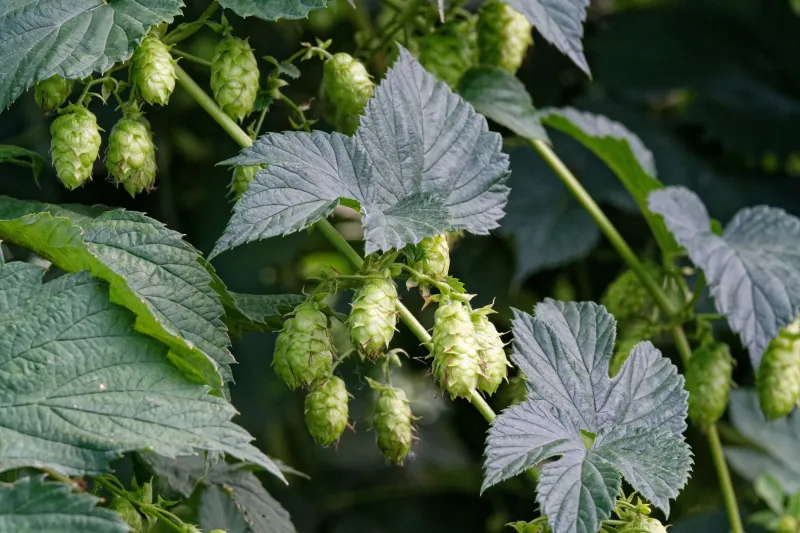
There's no official registry. No membership card. No newsletter you can subscribe to. The people preserving some of America's rarest hop varieties operate more like a loose guild than an organization — connected by word of mouth, shared obsession, and the occasional padded envelope stuffed with rhizome cuttings mailed across state lines.
Call them the hops underground. And if you've ever tasted a craft beer that hit you with something genuinely unexpected — a floral note you couldn't quite name, a citrus edge that didn't fit any variety you recognized — there's a decent chance one of these people had something to do with it.
What Gets Lost When Agriculture Gets Efficient
The commercial hops industry is, by necessity, a machine built for consistency. The big players — your Cascades, your Centennials, your Citra — dominate because they deliver predictable alpha acid levels, reliable yields, and the kind of uniformity that large-scale brewing demands. That's not a criticism. It's just economics.
But efficiency has a cost. Dozens of hop varieties that thrived in American soil a century ago have effectively vanished from commercial production. Some were casualties of Prohibition, when hop yards across the country were simply abandoned. Others were outcompeted when higher-yielding cultivars came along. A few were lost to disease. And some just... drifted out of fashion before anyone thought to save them.
"The gene pool that commercial agriculture works from is actually pretty narrow," says one independent hop farmer in the Willamette Valley who asked to be identified only by his first name, Dale. "There were hundreds of distinct varieties growing in this country before World War II. Most people in the industry today couldn't name ten of them."
Dale has been growing and trading rare hop rhizomes for nearly fifteen years. His operation is small — a few acres, mostly for personal use and trade — and deliberately off the radar. "I'm not trying to compete with anyone. I just don't want this stuff to disappear."
The Currency of the Underground
In this world, rhizomes are the coin of the realm. A rhizome is essentially a root cutting — a small section of underground stem that can be planted and grown into a full hop bine. Because hops propagate vegetatively rather than from seed (at least for true-to-type reproduction), a single cutting from a rare plant can become the foundation of an entirely new crop.
These cuttings move through the network in ways that would look chaotic from the outside. A brewer in Vermont gets a tip about a heritage variety still growing on an old farm in upstate New York. She reaches out, visits, takes a few cuttings home, grows them out, and eventually shares extras with a homebrewer in Oregon who connected her to the original source. That homebrewer passes a cutting to a small commercial operation in Colorado. And so it goes.
"It's basically a gift economy," says Marcus, a homebrewer in Portland who's been collecting and propagating rare varieties for about eight years. "You don't sell these things. You share them, and you trust that the person you're sharing with is going to take care of them and keep passing them along."
Marcus currently tends to eleven distinct varieties, several of which he believes exist in fewer than a handful of growing locations nationwide. He's vague about which ones — not out of secrecy exactly, but because he genuinely worries about demand outpacing the available supply. "If I told you the name of one of these and it blew up online, I'd have a hundred requests I couldn't fill. And the plant would still only be in a few places. That's not preservation. That's just hype."
Why Flavor Is the Whole Point
Ask any of these growers why the work matters and they'll eventually get around to flavor — usually pretty quickly.
Modern commercial hop breeding has optimized heavily for bitterness and aroma compounds that pair well with the IPAs and pale ales dominating today's craft market. That's produced some genuinely great hops. But it's also narrowed the flavor vocabulary that brewers have to work with.
The old varieties tell a different story. Some of the heritage hops Dale grows carry earthy, almost herbal characteristics that don't map onto anything in the current commercial catalog. One variety he describes as tasting "like someone dried a field of wildflowers and then walked through it in leather boots" — which sounds absurd until you realize that's exactly the kind of complexity that serious brewers go looking for.
"These varieties evolved in specific American soils and climates over decades," he says. "They carry a kind of flavor memory that you just can't engineer from scratch. When you brew with them, you're tasting something that's genuinely local, genuinely historical. That's not nothing."
Several small craft breweries have started sourcing rare rhizomes specifically to develop one-off or seasonal releases built around heritage varieties. The results aren't always crowd-pleasers — some of these hops are assertively weird, and not in the approachable way that's become craft beer shorthand for "interesting." But for a certain kind of drinker, and a certain kind of brewer, that's precisely the appeal.
The Tension with the Industry
Not everyone in the commercial brewing world is thrilled about what this underground network represents.
Large breweries have significant investment in hop contracts and supply chain stability. The idea of obscure, unverified varieties making their way into commercial beers raises real questions about consistency and quality control. And there's a legitimate concern — some heritage varieties carry disease susceptibilities that were bred out of modern cultivars for good reason.
"We're not reckless about this," Marcus is quick to say. "Anyone serious about preservation is also serious about plant health. You don't share cuttings from sick plants. You quarantine new material before it goes near anything else. There's a level of care here that people don't always assume."
Still, the tension is real. The commercial hops industry has both the resources and the motivation to develop new proprietary varieties, and it does so constantly. But proprietary development and preservation are different projects with different goals. One is looking forward; the other is making sure the past doesn't get bulldozed in the process.
An Offshoot Worth Following
There's something that feels very on-brand for craft beer culture in all of this — the idea that the most interesting stuff is happening at the margins, in backyards and on small farms, passed hand to hand by people who care more about the thing itself than about what they can get for it.
If you want to find your way into this world, the entry points are quieter than you'd expect. Homebrewing communities are a good start. Local agricultural extension programs sometimes have information on heritage varieties. And if you find a small brewery releasing something billed as a heritage or landrace hop single, it's worth asking where the hops came from. The answer might lead you somewhere genuinely interesting.
Just don't expect a mailing list.