Taste Lab: The Rogue Scientists Helping Craft Brewers Engineer Flavor From the Inside Out
Describing a beer as tasting like "tropical fruit" used to be good enough. These days, a brewer worth their grain bill might want to know which tropical fruit, at what stage of ripeness, and whether the perception hits the front of the palate or blooms at the back. The difference between those answers isn't academic—it's the difference between a beer that's interesting and one that's genuinely unforgettable.
A small but growing contingent of craft brewers across the US is going deeper than any tasting note has ever taken them, partnering with sensory scientists, professional flavor researchers, and even people with backgrounds in perfumery to understand taste not just as something you experience, but as something you can deliberately construct. The results are changing what ends up in the glass—and reshaping what brewers think their job actually is.
The Problem With Trusting Your Gut
Experienced brewers develop extraordinary palates over years of tasting. That expertise is real and it matters. But human perception is also famously unreliable, context-dependent, and riddled with blind spots that even the most seasoned professional can't fully account for.
Flavor scientists have known this for decades. The fragrance and food industries have long used trained sensory panels, controlled tasting environments, and rigorous statistical analysis to understand how people actually experience flavor—as opposed to how they think they experience it. The gap between those two things turns out to be enormous.
For craft brewers, the introduction of this kind of thinking is a bit like putting on glasses for the first time. Suddenly you're not just chasing a vague instinct about what a beer should taste like. You have tools for understanding why a particular hop combination reads as "dank" to some tasters and "piney" to others, or why a beer with identical ingredients can taste completely different depending on the glass shape, the serving temperature, or even what the drinker ate an hour before.
What a Flavor Scientist Actually Does in a Brewery
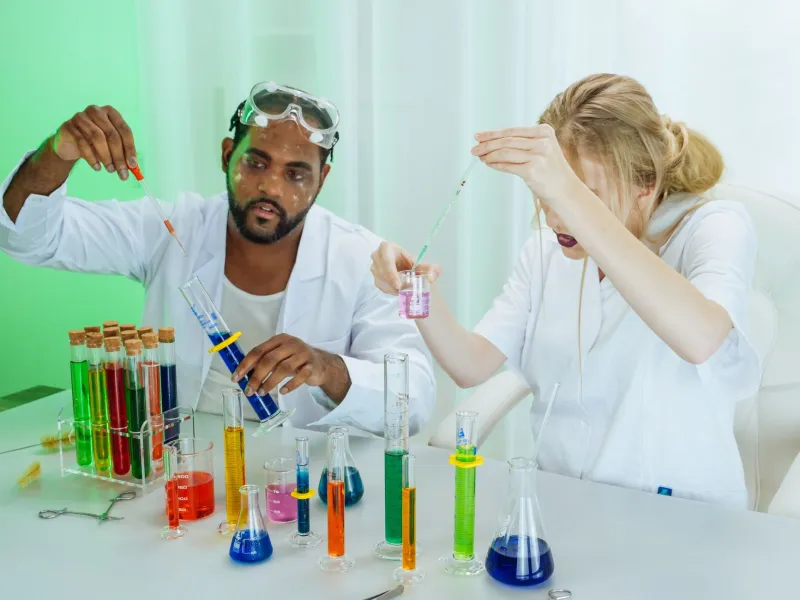
The collaboration looks different depending on who's involved, but the core process tends to follow a similar arc. A brewer starts with a flavor concept—something specific and often a little strange. Not just "citrus," but "the smell of a citrus peel being zested over a wooden cutting board in a warm kitchen." The sensory scientist's job is to help deconstruct that concept into its component perceptual elements and figure out which brewing variables might actually deliver them.
This is where it gets technical in ways that traditional brewing education doesn't really prepare you for. Flavor perception isn't just about what's chemically present in a liquid. It's about how volatile compounds interact with receptors in the nose and mouth, how the brain integrates those signals with visual cues and texture information, and how prior experience shapes what a drinker expects—and therefore what they perceive.
Some brewers working in this space are using gas chromatography to map the aromatic compounds in their finished beers against a target flavor profile. Others are running blind tasting panels with trained evaluators who've been calibrated against standardized flavor references. A few are going further still, consulting with researchers who study olfactory memory and the neuroscience of taste to understand how emotional associations with flavor are formed and how beer can intentionally trigger them.
The Perfume Connection
One of the more unexpected crossovers happening at the edges of craft brewing right now is between brewers and people trained in haute perfumery. It sounds eccentric until you understand that fragrance professionals are essentially doing the same work brewers are—building complex, multi-layered aromatic experiences from a palette of ingredients—but with a century's worth of formal methodology behind them.
Perfumers think in terms of top notes, heart notes, and base notes: the initial aromatic impression, the character that develops as you spend time with a scent, and the lingering finish. Applied to beer, this framework offers a genuinely useful vocabulary for thinking about how flavor unfolds over the course of a drinking experience, from the first sniff to the last sip.
Some brewers who've engaged with this world talk about it as a kind of creative liberation. You stop thinking about your beer as a liquid with a flavor and start thinking about it as an experience with a shape. That shift in mental model changes the decisions you make at every stage of the brewing process.
Chasing the Impossible
Not every flavor experiment lands. In fact, the brewers working at this frontier are refreshingly candid about the failure rate. Translating a precise flavor concept into a finished beer involves too many variables—biological, chemical, environmental—for success to be guaranteed. Sometimes the science points you in a direction that the ingredients simply can't follow.
But the failures are instructive in ways that gut-instinct brewing rarely produces. When you have a clear sensory target and a systematic process, a miss tells you something specific. You know which variable to adjust, which compound was missing or overexpressed, which step in the process introduced an off-note that derailed the whole thing. That kind of structured learning accelerates development in a way that's hard to replicate through intuition alone.
The beers that do succeed tend to be genuinely difficult to describe using the standard vocabulary of craft beer reviews. They taste like something specific, something almost narrative—not just "hoppy" or "malty" but evocative in a way that sticks with you. Drinkers often struggle to explain why a beer made this way is different, but they know that it is.
Flavor as Craft
There's a philosophical dimension to all of this that the brewers involved seem to think about a lot. Bringing scientific rigor to flavor creation doesn't mean removing the artistry from brewing. If anything, having better tools for understanding what you're trying to achieve makes the creative decisions more intentional and, ultimately, more meaningful.
The best craft brewers have always been chasing something specific—a feeling, a memory, a place, a moment in time. The sensory science revolution isn't changing that ambition. It's just giving brewers a better map for the territory they've always been trying to explore.