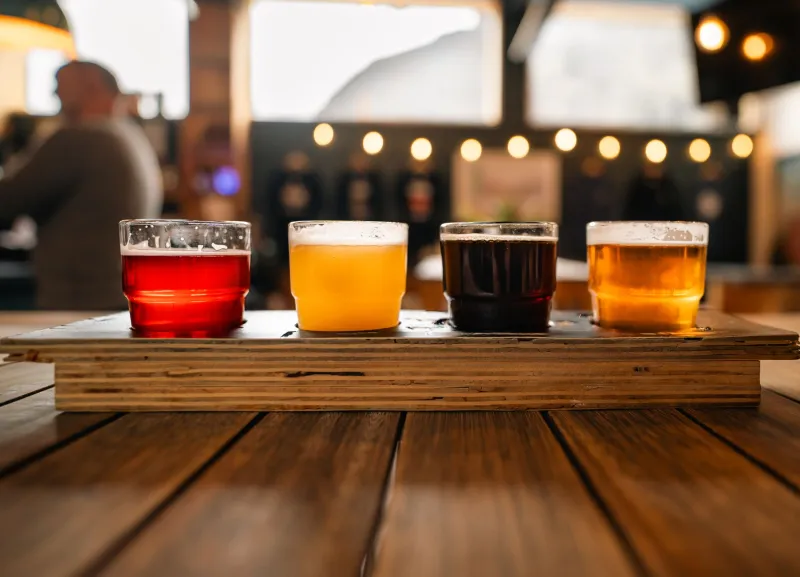
The Paper Trail in Your Pint: How Brewers Are Becoming Archivists to Reclaim America's Lost Beer Styles
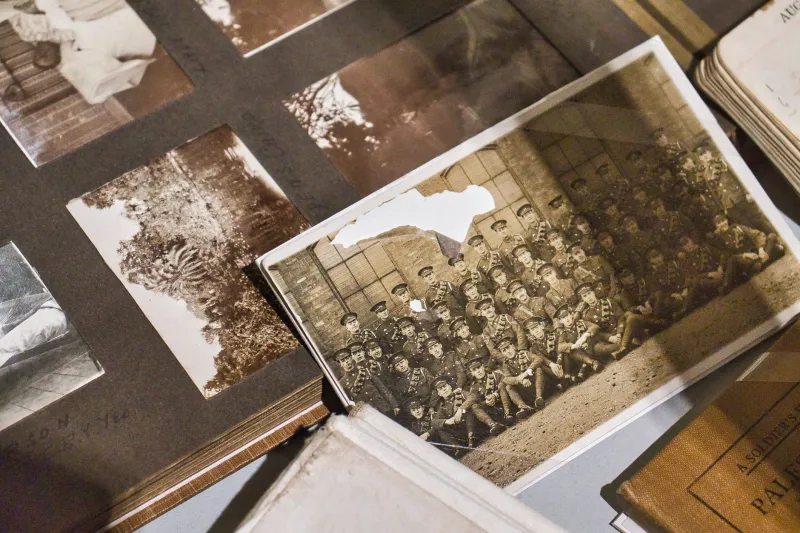
Most brewers keep their research in spreadsheets. Josh Hensley keeps his in a banker's box.
Inside: photocopies of classified ads from a 1908 Cincinnati newspaper, a handwritten ledger page from a defunct Ohio brewery, two pages torn from a brewing supply catalog dated 1923, and a photograph of a taproom that no longer exists. He found most of it at the county historical society on a Tuesday afternoon, the kind of afternoon most people spend doing something more immediately productive.
"I told my wife I was doing market research," he says. "She didn't buy it."
Hensley runs a small production brewery in southwestern Ohio, and for the past three years he's been working on something he calls recipe archaeology — the painstaking process of mining historical records to reconstruct beer styles that were once native to his region and have since completely disappeared. He's not the only one doing it, and the beers coming out of this kind of work are some of the most genuinely surprising things happening in American craft brewing right now.
What Prohibition Actually Destroyed
The standard narrative about Prohibition is that it wiped out American brewing and left behind a vacuum that industrial lager filled when the taps came back on in 1933. That's true, but it undersells the specificity of what was lost.
Before Volstead, American brewing was intensely regional. A city like Cincinnati had a distinct beer culture shaped by German immigrant brewers who'd adapted their techniques to local water, local grain, and local taste. Philadelphia had its own thing. Louisville had its own thing. Rural Pennsylvania had its own thing. These weren't just regional variations on a global style — they were genuinely local products that reflected the specific agricultural and cultural conditions of their place.
When Prohibition hit, most of the smaller operations never came back. The ones that did survive consolidation over the following decades gradually homogenized toward whatever national style was moving the most volume. By 1970, the regional distinctiveness that had characterized American beer for a century was largely gone.
What remained were the records.
The Archive as Ingredient
For brewers like Hensley, the historical record is less a curiosity than a practical resource. Old newspaper advertisements sometimes included partial recipes or at least enough descriptive language to reconstruct a style's basic character. Brewing supply catalogs from the late 1800s and early 1900s list the ingredients that were commercially available in specific regions, which helps narrow down what local brewers were likely working with. Brewery ledgers — when they survive — can show production volumes, ingredient quantities, and sometimes seasonal variations that tell you a lot about how a style actually functioned in practice.
Family records are particularly valuable. In communities with strong immigrant brewing traditions, recipes were sometimes passed down through families even after the commercial operations closed. A German-American family in Wisconsin might have a grandfather's notebook with brewing notes that predate Prohibition. A Czech community in Nebraska might have preserved a yeast culture through generations of home fermentation without ever fully realizing what they had.
"People don't always know they're sitting on something significant," says one brewer in the mid-Atlantic who's been doing similar work focused on colonial-era and early industrial American beer styles. "You reach out through local historical societies, you post in community Facebook groups, and sometimes someone messages you with a photograph of a handwritten recipe their great-grandmother kept in a Bible."
The Translation Problem
Finding the historical record is one challenge. Interpreting it is another.
Old brewing documents weren't written for posterity. They were working notes, and they assumed a level of shared knowledge that no longer exists. Measurements were often in units that varied by region. Ingredients were listed by names that have since changed or disappeared entirely. Fermentation instructions might read as obvious shorthand to a brewer in 1890 and as complete gibberish to someone trying to reconstruct the recipe in 2024.
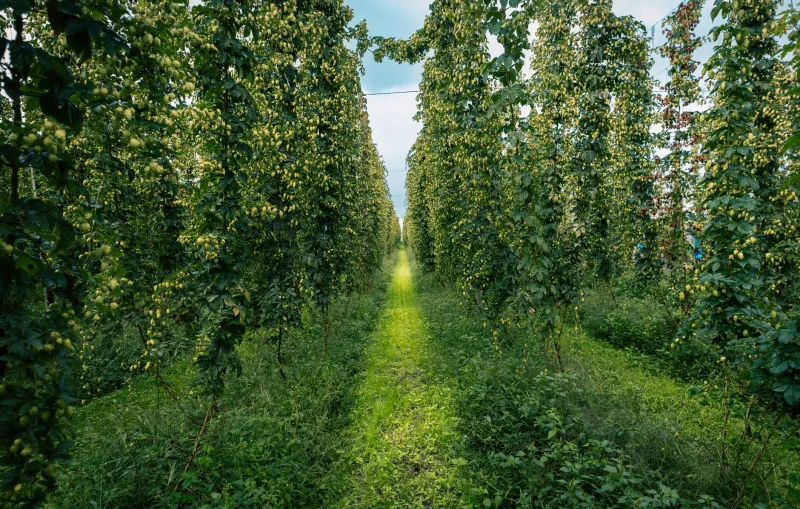
This is where the detective work gets genuinely interesting. Brewers working in this space often end up consulting with food historians, agricultural researchers, and occasionally university brewing programs to decode what they've found. A reference to a specific hop variety that hasn't been commercially grown since the 1940s might require tracking down a plant geneticist who knows whether any related cultivars still exist. A grain variety mentioned in an 1880s recipe might have been entirely replaced by modern agricultural breeding, requiring work with heritage grain farmers to find the closest available analog.
None of this is fast, and none of it is cheap. The beers that come out of this process are almost always small-batch, limited releases — partly because of the cost of sourcing specialty ingredients, and partly because the brewer can't always be sure the result will be something they want to make a lot of.
Reclaiming Local Identity
The beers themselves are interesting. But the more compelling story might be what they mean to the communities where they're being revived.
When a brewery in a mid-sized Rust Belt city releases a beer that's explicitly tied to a pre-Prohibition local tradition — complete with historical notes, archival photographs, and a story about where the recipe came from — it's doing something that goes beyond product differentiation. It's making a claim about place. It's saying that this city had a beer culture worth remembering, and that the people drinking in this taproom tonight are connected to something longer than they might have realized.
In a moment when a lot of American communities are actively grappling with questions of local identity and civic memory, that's not a trivial thing to offer. A pint of something that tastes like 1904 Cincinnati, or 1920s Philadelphia, or pre-Prohibition Louisville, is a small but real act of cultural recovery.
And honestly? Sometimes it just tastes really good.
The Work Continues
Hensley's banker's box has gotten heavier. He's added a collection of photographs from a brewing industry trade journal from the 1910s, a partial recipe he found referenced in a letter at the Ohio History Center, and a list of local hop farms that were operating in his county before the first World War. He's not sure yet what beer any of it will eventually produce.
"That's kind of the point," he says. "You follow the trail and see where it goes. Most of the time it goes somewhere interesting."