Friendly Rivals, Unforgettable Beers: Inside the Collaboration Economy Reshaping Craft Brewing
There's a certain logic to competition. You protect your recipes, guard your yeast strains, keep your hop contracts close to the chest. For most industries, that's just how the game is played. But spend any time talking to the brewers who've been putting out some of the most interesting beers in the country lately, and you start to hear a different story — one where the best thing that ever happened to their flagship IPA was a phone call from the brewery two towns over.
Collaboration brewing isn't new. Brewers have been guest-hosting each other's kettles for years. But what's changing is the depth of it. We're not just talking about slapping two logos on a can and splitting the print run. The most interesting partnerships happening right now involve genuine creative risk — ingredient swaps that neither brewer would have tried solo, fermentation experiments that required one party to admit they didn't have all the answers, and recipe archaeology that only made sense when two different institutional memories sat down at the same table.
Why Competitors Make the Best Collaborators
It sounds counterintuitive, but there's a reason some of the most innovative collab beers come from breweries that are technically competing for the same tap handles. When two friends from completely different industries get together, the conversation stays polite. When two brewers who've been watching each other's taproom numbers for three years sit down, things get honest fast.
"There's no posturing," says one Midwest brewer who's done half a dozen collab releases with a regional competitor over the past few years. "We both know exactly what the other person's challenges are. We skip the part where we pretend we have it all figured out."
That directness tends to accelerate experimentation. When you're working with someone who understands your constraints — your tank sizes, your distribution limits, your customer base — you can get to the interesting questions faster. What happens if we dry-hop with your house strain instead of mine? What if we split the grain bill and each bring something the other doesn't use? What if we ferment half the batch at your place and half at mine and just see what's different?
Those aren't questions you ask a brewing consultant. They're questions you ask someone who has as much skin in the game as you do.
The Ingredient Swap Economy
One of the most compelling trends within collaboration brewing is what some brewers are calling the ingredient swap — essentially a trade where each brewery contributes a proprietary or hard-to-source component that the other couldn't easily access on their own.
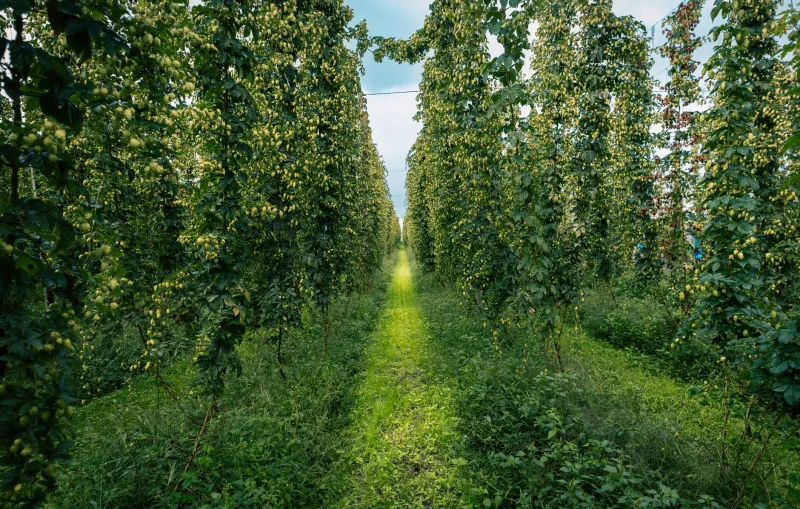
A hop farmer in the Pacific Northwest might have a small-lot experimental variety that only a handful of breweries can source. A maltster in the mid-Atlantic might be doing something interesting with heritage grain that their local brewery has first access to. When two breweries swap ingredients like this, the resulting beer carries a kind of provenance that's genuinely difficult to manufacture through conventional supply chains.
Some breweries have formalized this into a kind of barter system — a barrel of their most sought-after sour culture in exchange for access to a specialty malt that's been aging in a partner brewery's warehouse. It's informal, it's relationship-driven, and it's producing beers that taste like nothing else on the shelf.
What Gets Left Behind
Of course, there are real tensions in this model. Intellectual property in brewing is a genuinely murky space. If you develop a proprietary fermentation technique and share it during a collaboration, what happens when your partner applies it to their own lineup six months later? Most brewers working in this space say the answer is trust — which is either reassuring or terrifying depending on your perspective.
"We've had conversations that got uncomfortable," admits one East Coast brewer who's navigated a few complicated partnerships. "You're sharing things that matter to you. There's no contract that covers all of it. At some point you're just betting on the relationship."
That vulnerability, oddly enough, seems to be part of what makes these collaborations work creatively. When both parties have something genuinely at stake — not just their time and ingredients, but their ideas and methods — the investment in the outcome tends to be higher.
Accelerating the Whole Industry
Zoom out a little and the picture gets interesting. When breweries collaborate openly, the innovations don't just stay between the two parties. A technique that gets developed for a collab release tends to influence both breweries' standard practices. A flavor combination that surprises everyone in the taproom during a collaboration event has a way of showing up — in evolved form — in both partners' regular seasonal lineups.
In this way, the collaboration economy functions almost like open-source software development. Individual breweries benefit from their specific partnerships, but the broader craft beer ecosystem absorbs the lessons too. Drinkers who've never heard of either brewery end up tasting something that traces back to a conversation between two competitors who decided to trust each other.
That's a pretty good return on a phone call.
The Collab as Community Event
There's one more dimension worth mentioning, and it's less about the beer itself than about what happens around it. Collaboration releases have become some of the most effective community-building events in the craft beer world. When two local breweries co-host a launch, they're not just combining their mailing lists — they're introducing their regulars to each other, creating a shared moment that neither brewery could have manufactured alone.
For a scene that's always been as much about place and people as it is about what's in the glass, that's not a small thing. The best collaborations feel less like business partnerships and more like what they actually are: two groups of people who love what they do, betting that they'll love it even more if they do it together for a while.
So far, they're mostly right.