Alive and Pouring: The Brewers Turning Their Tanks Into Thriving Microbial Ecosystems
There's a moment every brewer knows — the one where something unexpected happens in the tank and the instinct is to panic. Call the lab. Dump the batch. Scrub everything down and start over. But a quietly radical group of American craft brewers has flipped that instinct on its head. For them, the unexpected isn't a disaster. It's the whole point.
These are the brewers building what some are calling living beers — pints shaped not just by grain, hops, and water, but by entire communities of wild bacteria and yeast that take up permanent residence in the brewery itself. The science behind it is genuinely fascinating, and the beers coming out the other side are unlike anything you'll find in a refrigerator case at your local grocery store.
What We Mean by a "Living" Beer
Most commercial brewing — craft included — is an exercise in control. Sanitize the equipment. Pitch a known yeast strain. Manage fermentation temperatures to the degree. The goal is reproducibility: every batch of your flagship IPA should taste exactly like the last one.
Living beer flips that model. Instead of eliminating microbial variables, brewers like those at outfits scattered across Vermont, Oregon, and the Carolinas are actively cultivating mixed cultures of Lactobacillus, Pediococcus, Brettanomyces, and other organisms directly in their vessels — and sometimes in the very walls, wood, and air of the brewery space itself.
The result? Beers that carry a genuine signature of place, and that shift in flavor profile as those microbial communities evolve over months and years. A saison brewed in January might taste noticeably different from the same recipe brewed in July — not because of a mistake, but because the living ecosystem inside the brewery has changed along with the seasons.
Mapping the Invisible
What's made this movement more than just romantic chaos is the arrival of accessible microbial mapping tools. A handful of forward-thinking breweries have partnered with food science labs — some affiliated with universities, others independent — to sequence the DNA of the microorganisms living in their tanks, drains, wooden barrels, and even the ambient air.
Think of it like a census, but for things you can't see. Once a brewery knows what is living in their space and in what proportions, they can start making intentional decisions about what to encourage and what to keep in check. Some brewers describe it as learning to conduct an orchestra they didn't write the sheet music for.
One brewer based in Asheville, North Carolina, started mapping her fermentation vessels after noticing that beers aged in one particular corner of her cellar always developed a distinctive stone-fruit quality. The mapping revealed a thriving colony of wild Brettanomyces that had apparently been quietly doing its thing for years. Rather than eliminate it, she began routing specific batches through that corner deliberately — essentially using geography within her own building as a flavor tool.
Intentional Contamination (Yes, Really)
If microbial mapping is the science, intentional contamination is the art form — and it's exactly as provocative as it sounds.
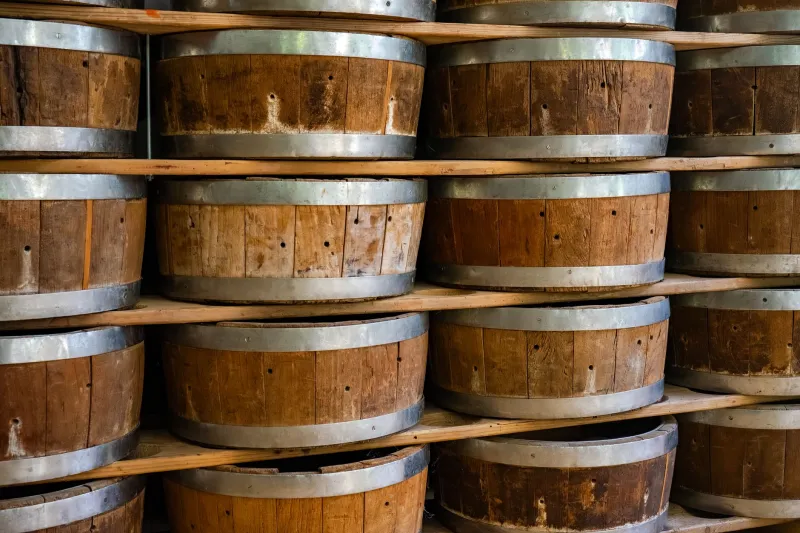
Some brewers are now introducing wild microbes from outside the brewery in controlled ways: swabbing wooden barrels with cultures harvested from local orchards, introducing dregs from farmhouse ales they admire, or even allowing open-air fermentation for specific batches to let whatever's floating around outside take a crack at the wort.
The practice has deep historical roots — Belgian lambic brewers have been doing something similar for centuries — but American craft brewers are applying a more data-driven lens to the process. Instead of just opening the windows and hoping for the best, they're tracking which inoculations produce which results, building what amounts to a flavor library of their local microbial landscape.
A small production brewery in central Vermont has taken this approach so far that they now maintain a "culture archive" — a collection of microorganism samples harvested from their fermentation vessels at different points over the past five years. When they want to recreate a particularly beloved batch, they don't just follow the recipe. They pull from the archive and reintroduce the specific microbial community that was present at the time.
The Consistency Problem (And Why It's Not What You Think)
The obvious question from a business standpoint: how do you build a loyal customer base around beers that are, by design, always changing?
The answer, it turns out, is that consistency doesn't have to mean sameness. What these brewers are selling — and what their fans are buying — is consistent character, not consistent flavor. Every batch from a living-beer brewery will carry the unmistakable fingerprint of that specific place and its microbial community, even as the individual expression shifts.
It's a bit like following a musician across multiple albums. The sound evolves. Some records hit harder than others. But you always know whose work it is.
Breweries leaning into this model tend to be upfront about it with their customers — often to a degree that turns the variability into a selling point. Tasting notes get written with language like "this batch leans more tart than last spring's release" or "we're noticing more tropical funk than usual this season." Far from scaring people off, that kind of transparency tends to build exactly the kind of engaged, curious fan base that shows up for every new release and actually wants to taste the difference.
Where This Is All Headed
The microbiome revolution in craft brewing is still early. Most drinkers haven't encountered a genuinely living beer yet, and even within the craft community, plenty of brewers remain skeptical — or at least cautious — about deliberately loosening control over their fermentation environments.
But the trajectory feels clear. As DNA sequencing tools get cheaper and more accessible, as more brewers share knowledge through networks and conferences, and as drinkers continue to push for more interesting and place-specific experiences, the appeal of brewing with living ecosystems rather than against them is only going to grow.
The breweries doing this work right now are, in a very real sense, building something that can't be replicated — not by a competitor, not by a large regional brewer, and not even by themselves if they moved to a different building. The beer is tied to the place in a way that goes all the way down to the microscopic level.
That's about as off the beaten path as brewing gets.