Less is More: The Craft Brewers Proving You Don't Need High ABV to Make Great Beer
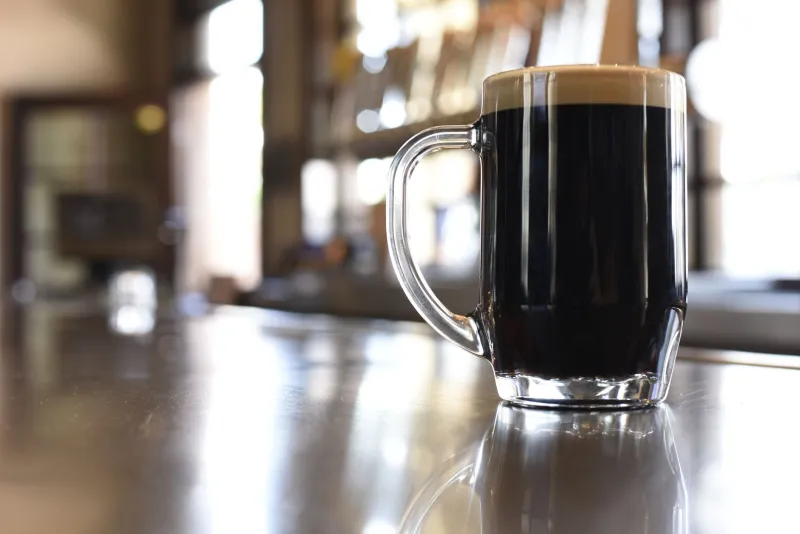
There was a time — not that long ago, honestly — when the craft beer world measured ambition in alcohol content. The higher the ABV, the more serious the brewery. Double IPAs. Triple stouts. Imperial everything. If your beer wasn't pushing past 8%, some corners of the enthusiast community weren't exactly rolling out the welcome mat.
That era isn't over, exactly. But something is shifting. Quietly, then loudly, a growing number of American craft brewers are going in the opposite direction — deliberately dialing back the alcohol, chasing subtlety over strength, and making a pretty compelling case that restraint is its own kind of innovation.
The "Bigger Is Better" Hangover
To understand where craft beer is heading, it helps to understand where it's been. The arms race toward high-ABV brewing was, in a lot of ways, a reaction to decades of watery domestic lagers dominating American shelves. Craft brewers wanted to prove a point. They wanted to be taken seriously. And cranking up the alcohol — along with the hops, the malts, the barrel aging — was one very loud way to do that.
It worked. Craft beer carved out its own identity, its own culture, its own dedicated following. But somewhere along the way, the pendulum swung hard. Taprooms started filling up with beers that were genuinely difficult to drink more than one of. "Sessionability" became almost a dirty word.
"I think we got a little obsessed with spectacle," says Marcus Dillard, head brewer at a small production brewery in Asheville, North Carolina. "Every release had to be bigger than the last one. And at some point I started asking myself — are we actually making better beer, or are we just making louder beer?"
That question led Dillard to spend the better part of two years developing what he calls his "quiet beers" — a rotating series of session ales and low-ABV lagers that top out around 4.2%. His taproom regulars were skeptical at first. Now those beers outsell almost everything else on the menu.
What Makes a Low-ABV Beer Hard to Make
Here's the thing most drinkers don't realize: brewing a genuinely great low-alcohol beer is technically harder than brewing a high-ABV one. That might sound counterintuitive, but the logic holds up once you dig into it.
Alcohol carries flavor. It's a solvent that pulls aromatic compounds forward and gives beer its body and mouthfeel. Strip it away and you've got to find other ways to build complexity. The scaffolding that high-ABV beers rely on just isn't there.
"With a double IPA, you've got so much going on that even if something's slightly off, it gets lost in the noise," explains Priya Khatri, a brewer and co-owner at a craft operation outside of Portland, Oregon. "With a 3.5% session pale ale, there's nowhere to hide. Every decision you make shows up in the glass."
Khatri has been experimenting with what she describes as "architectural brewing" — using hop selection, grain bill ratios, and fermentation timing to construct layers of flavor that don't depend on alcohol to hold them together. Her current flagship is a 3.8% pale ale that somehow manages to taste fuller and more complex than beers twice its strength. It's become a local obsession.
The technical challenges extend to fermentation itself. Getting yeast to stop at the right point without leaving the beer tasting thin or unfinished requires careful strain selection and precise temperature control. Some brewers are turning to specialty malts that add body without sweetness. Others are leaning into hop-forward techniques — dry hopping, cryo hops, whirlpool additions — to compensate for what the alcohol isn't doing.
Session Culture and the Drinking Experience
Beyond the technical side, there's a cultural argument being made here, and it resonates with a lot of drinkers who've been quietly feeling the same way.
Craft beer, for many people, is a social thing. It's sitting on a patio with friends for three hours on a Saturday afternoon. It's watching a game. It's a long dinner conversation. And when every beer in front of you is clocking in at 9%, that kind of leisurely, extended drinking experience becomes — well, complicated.
"People want to be present for the whole night," says Jordan Whitfield, who runs a small taproom in Chicago's Logan Square neighborhood. "They want to drink great beer and still remember the conversation they had. There's a real appetite for that."
Whitfield launched a dedicated "session series" about eighteen months ago, built entirely around beers under 4.5% ABV. The lineup includes a crisp English-style bitter, a dry-hopped session IPA, and a light Czech-influenced lager that he's particularly proud of. The series started as a limited experiment. It's now a permanent part of the tap list.
This shift also connects to broader wellness trends moving through American drinking culture. Younger drinkers especially — the ones increasingly shaping what craft beer looks like — are more conscious about alcohol consumption than previous generations. They're not necessarily going sober, but they're thinking more intentionally about how and how much they drink. Low-ABV craft beer sits right in that sweet spot: a genuinely flavorful, artisanal product that fits a more mindful approach to drinking.
Flavor First, Everything Else Second
What's striking about the brewers leading this movement is how consistently they frame it around flavor rather than health or moderation messaging. This isn't a wellness play dressed up as craft beer. These are people who are genuinely excited about what becomes possible when you remove the ABV crutch.
"I've learned more about flavor in the last two years of brewing low-ABV beers than in the decade before that," Dillard says. "You start paying attention to things you never had to think about before. Water chemistry. Grain texture. The timing of your hop additions. It's like someone turned the resolution up on everything."
Khatri puts it even more directly: "I'm not anti-imperial stout. I love a big beer when the moment calls for it. But if you're only brewing at the extremes, you're missing a huge range of what beer can be. The middle of the flavor spectrum is where a lot of the most interesting stuff is happening right now."
The Road Ahead
The low-ABV movement in craft beer is still finding its footing. It doesn't have the cultural cachet of a barrel-aged release or the Instagram moment of a hazy double IPA. Getting drinkers to pay craft prices for a 3.8% beer — when they've been conditioned to equate low alcohol with low quality — remains a genuine challenge.
But the brewers doing this work seem largely unconcerned with that particular battle. They're focused on the beer itself. On proving, one pint at a time, that the most interesting thing you can do isn't always the loudest.
Sometimes the off-the-beaten-path move is knowing when to hold back.