Taste of Place: How America's Wildest Climates Are Brewing Up Entirely New Beer Identities
There's a word the wine world has been throwing around for centuries: terroir. It's the idea that a grape — and the wine it eventually becomes — carries the fingerprint of the soil, the weather, the elevation, and the specific patch of earth where it grew. Craft brewers have been quietly borrowing that concept for years, but lately, something bigger is happening. A growing number of American breweries aren't just acknowledging their environment — they're building entire identities around it.
And the results? They're genuinely hard to replicate.
The Rain-Soaked Northwest: When Moisture Becomes a Feature
Ask most brewers about humidity and they'll wince. Moisture control is a headache in fermentation environments, and wild ambient yeast can turn a carefully planned batch into something unintended. But in the rain-heavy valleys of western Oregon and Washington, a handful of brewers have flipped that script entirely.
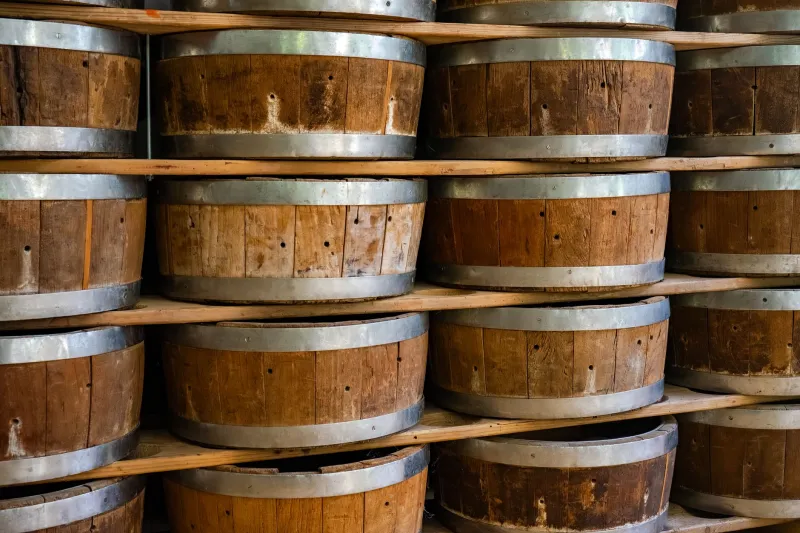
"We stopped thinking of the wet air as a problem about four years ago," says one brewer operating a small farmhouse-style operation in the Willamette Valley. "Our open fermentation vessels pull in whatever's floating around out there — wild spores, ambient bacteria, the whole ecosystem. We couldn't replicate this in a sealed facility in Phoenix if we tried."
The result is a lineup of farmhouse ales and spontaneously fermented beers that carry a distinctly mossy, earthy character — something between a Belgian lambic and something you've genuinely never tasted before. The regional hop scene helps too. Wet-hop harvests in the Pacific Northwest happen during a narrow window each fall, and breweries close enough to hop yards can get cones from field to kettle in under 24 hours. That freshness creates a grassy, almost vegetal brightness that disappears entirely once hops are dried and processed.
The microclimate here isn't just backdrop. It's an ingredient.
High and Dry: Colorado's Altitude Problem (That Turned Into a Superpower)
Brewing at elevation does weird things to beer. Water boils at a lower temperature, which affects hop utilization and malt extraction. Carbonation behaves differently. Fermentation runs hotter. For a long time, Colorado brewers treated these quirks as obstacles to work around — calibrating recipes designed elsewhere to perform at 5,000 or even 10,000 feet above sea level.
But some brewers in mountain towns like Telluride, Leadville, and Steamboat Springs have started leaning into the altitude-specific character their beers develop naturally.
"At this elevation, your hop bitterness integrates differently," explains one head brewer at a taproom tucked into a former mining supply warehouse. "We've found that IPAs brewed here have this softer, rounder bitterness compared to the same recipe brewed at sea level. We stopped chasing the sharp bite and started building around the smoothness."
The dry mountain air also means faster lagering and conditioning cycles, which some Colorado brewers are using to their advantage — producing clean, crisp lagers with a clarity that's genuinely difficult to achieve in more humid climates without extra filtration. Visitors to these taprooms often notice the beers taste different when they bring cans home to lower elevations. That's not imagination. The altitude really is doing something.
The Southern Swamp: Embracing Funk in the Heat
If Pacific Northwest brewers are working with moisture and Colorado brewers are working with altitude, then brewers in the Deep South are working with something that most of the craft beer world has historically avoided: relentless, oppressive heat.
Summer temperatures in Louisiana, Mississippi, and coastal Georgia regularly push past 95°F with humidity to match. Traditional fermentation wisdom says cool and controlled is better. But a cluster of Southern breweries have started asking a different question: what if we worked with the heat instead?
In practice, that means higher fermentation temperatures that push certain yeast strains to produce more esters and phenols — the fruity, spicy, almost wine-like compounds that define Belgian ales and hefeweizens. A few brewers in New Orleans and Savannah have started cultivating house yeast strains that actually perform best in warmer conditions, producing beers with a lush, almost tropical richness that feels completely at home in the climate.
"We tried air-conditioning our fermentation room to hit standard temperatures," admits one brewer whose taproom sits a few blocks from the Mississippi River. "The beer was fine. But when we let it run warm the way the room naturally wants to, the beer got interesting. There's this stone fruit thing happening that we've never been able to engineer on purpose."
The local ingredient angle runs deep in the South too. Sugarcane adjuncts, satsuma citrus from Louisiana orchards, and wild muscadine grapes from Georgia are all showing up in beers that feel unmistakably rooted in place.
Why This Matters Beyond the Hype
The microclimate conversation isn't just a marketing angle — though it's definitely become that for some breweries. At its core, it represents a genuine shift in how American craft brewers think about originality.
For decades, the craft beer movement was defined largely by style — the pursuit of the perfect IPA, the most authentic Bavarian hefeweizen, the cleanest Czech pilsner. Those goals aren't going away, but a new layer is being added on top of them. Brewers are increasingly asking not just what they're making, but where they're making it — and whether the answer to that second question can become as much a part of the beer's identity as the recipe itself.
This is, in some ways, the most American version of that old European terroir concept. The U.S. is a country of wildly different landscapes crammed into a single border — alpine tundra, subtropical wetlands, high desert, temperate rainforest, rolling plains. If every one of those environments has something to offer a brewer willing to pay attention, the potential for genuinely distinct regional beer cultures is enormous.
We're not talking about gimmicks. We're talking about beers that carry coordinates.
Finding Your Way to These Beers
The honest truth is that many of the most interesting microclimate-driven beers don't travel well — or at least, they lose something when they do. The open-fermented farmhouse ale from the Willamette Valley is best experienced in the Willamette Valley. The altitude-smoothed IPA from a Telluride taproom hits differently at 8,750 feet than it does back home in your living room.
That's actually the point. These beers are invitations to go somewhere. They're the kind of thing that makes a road trip feel justified — not just because you want a cold beer at the end of the drive, but because the drive itself is part of what you're tasting.
America's craft beer map is still being drawn. And the brewers paying closest attention to the ground beneath their feet are doing some of the most interesting drawing.